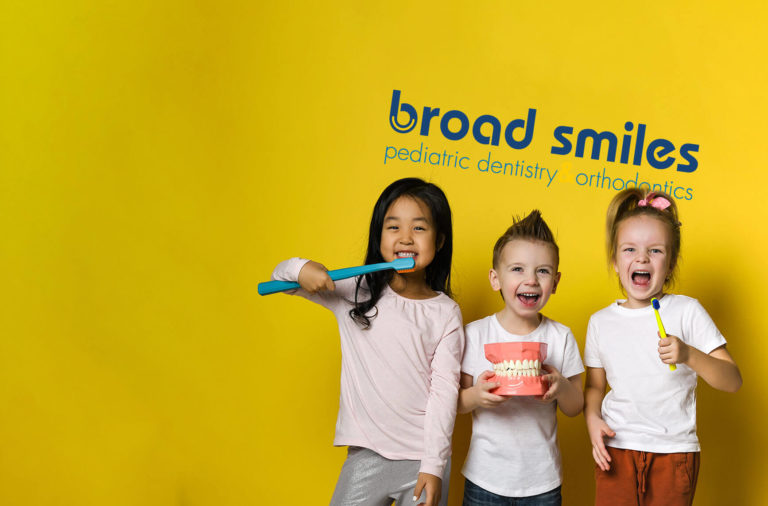
Your Child’s First Dental Visit at Broad Smiles: What to Expect and How to Prepare
When should my child first see the dentist?
The American Academy of Pediatric Dentistry recommends that children visit the dentist by their first birthday or within six months of their first tooth erupting. Early visits allow the dental team to monitor growth and development, catch concerns early, and help parents establish strong preventive habits from the start.
At Broad Smiles Pediatric Dentistry & Orthodontics, early pediatric checkups are designed to set the foundation for a lifetime of healthy smiles.
What happens at the first appointment?
Your child’s first dental visit is typically gentle, educational, and reassuring. During pediatric checkups, the team will:
-
Examine your child’s teeth, gums, and jaw development
-
Check for early signs of cavities or concerns
-
Gently clean the teeth, if appropriate
-
Discuss thumb-sucking, pacifier use, and nutrition
-
Answer any questions you may have about brushing, flossing, or fluoride
The goal is not just to examine teeth, but to build comfort and trust.
A kid-friendly approach to pediatric dentistry
Broad Smiles specializes in pediatric dentistry, which means every aspect of care is tailored to children’s unique needs. From smaller dental instruments to a compassionate, upbeat team, the environment is designed to help kids feel safe and confident.
Because the practice also offers orthodontic services, the team can monitor your child’s bite and jaw development early on. This proactive approach helps identify potential orthodontic concerns before they become more complex.
How parents can prepare for the visit
You can help make your child’s first dental visit a success by:
-
Talking about the dentist in a positive, simple way
-
Reading children’s books about dental visits
-
Scheduling the appointment at a time when your child is well-rested
-
Bringing a favorite comfort item
Avoid using words that may sound scary, like “hurt” or “shot.” Instead, focus on how the dentist helps keep teeth strong and healthy.
Why early visits matter
Early pediatric dental visits help prevent cavities, support healthy development, and reduce dental anxiety over time. When children start visiting the dentist young, appointments feel routine rather than intimidating.
At Broad Smiles Pediatric Dentistry & Orthodontics, the focus is on prevention, education, and making every child feel proud of their smile. The first visit is just the beginning of a partnership in your child’s long-term oral health.
Is it time for your child’s first checkup?
If your child hasn’t had their first dental visit yet, now is the perfect time to start. Schedule a pediatric checkup at Broad Smiles Pediatric Dentistry & Orthodontics in Lynn, Lynnfield, or Salem, MA, and give your child a healthy, confident start.
Pediatric Dental Care: Starting Your Child Off on the Right Tooth
The quality of dental care a child receives while growing up can have a huge impact on their teeth — and even their general health — for the rest of their life. Dental care sets the stage for the way teeth develop as they grow, and it’s important to begin with a good foundation. To reinforce healthy brushing habits with children and make sure their teeth are coming in nicely, we recommend visiting the dentist early, with a first visit at about twelve months of age, which is usually less than six months after their first tooth shows up.
Here are a few specific reasons to take your children to the dentist early in their lives:
Baby Teeth are Important
Your child’s baby teeth aren’t disposable just because they’re temporary. They play an important role in your child’s development. Making sure their baby teeth are in order will have a positive effect long after they lose them. Baby teeth act as placeholders for adult teeth; they help your child’s jaw and gums develop in the right way. Not only that, healthy baby teeth help children learn to speak by supporting the shape of the mouth correctly. And a dazzling smile is good for their self-esteem.
Experience Calms Anxiety
Many grownups feel anxious about going to the dentist. However, if you bring your children in for a visit at about the age of twelve months, they’ll be too young to think anything bad is going on and they won’t likely be very worried. One of the best ways to help children avoid the development of dental anxiety is to begin building a habit of regular dental visits early in life. Parents who wait until children are two years of age or older likely will have a much rougher time with visits at early ages, and the children could develop lifelong anxiety about going to the dentist.
Tooth Decay Comes Early
Tooth decay can set in as soon as your child develops their first tooth. A CDC report showed that as many as 40% of children will develop some form of tooth decay before they reach kindergarten. And that decay can have a long-term effect on the health of their teeth and gums.
Nip Problems in the Bud
After children have stopped growing, it can be difficult to get crooked teeth back in order. The process is likely to be more difficult, longer and more uncomfortable for the patient than if the problems are taken care of early in life. That’s why there’s no better time to fix misaligned or crooked teeth than when your child is still growing. As soon as their teeth show signs of these problems, we can begin early to guide their teeth into the correct position.
Giving your child’s teeth the care they deserve sets them up for dental success in the future by introducing good dental hygiene habits and preventing problems from getting worse as their teeth age. If you have any questions about how to give your child the best dental care possible or would like to set up an appointment, give us a call at 712-276-8391. Begin proper dental care as soon as your child’s first tooth shows up and you’ll put them on the road to a healthy, beautiful smile all their lives.
Why Are Baby Teeth Important?
Tiny, but important ― that’s how baby teeth are referred to, especially by dentists. While most parents would look at their babies’ tiny teeth and wonder what in the world they could be thinking about, dentists realize early on that these tiny teeth aren’t just for looking at cute smiles and giggles.
Taking good care of your baby’s teeth early on is crucial to their oral health now and for the rest of their lives. We’ve come up with several reasons why you want to keep your baby’s teeth in tip top shape.
- These teeth are crucial to your child’s health and development. They help with the development of permanent teeth by saving space for them in the jaw. When a baby tooth is lost too early, the permanent teeth can drift to the empty space and make it difficult for other adult teeth to find room when they come in.
- Baby teeth aid in speech development. Taking care of your child’s teeth will help them speak and communicate better.
- They help your child maintain good nutrition by permitting him/her to chew properly.
- Baby teeth help children feel good about themselves and their smile. It’s so important for children to feel confident from a young age and keeping their teeth healthy is imperative.
What happens if baby teeth aren’t taken care of?
Baby teeth can get cavities, just like adult teeth. In addition to the pain caused by cavities, they can also lead to dental infections. Tooth decay is a serious, infectious, and transmissible disease that can spread quickly and lead to infection. If a tooth needs to then get extracted, this can cause the teeth to drift, which may lead to overcrowding and difficulty for the adult teeth to grow in.
Be sure to visit a dentist within six months of your child’s first tooth appearing and definitely by the time they reach the one year mark. Our team will check for cavities and any other pediatric dental problem. We’ll also help show you and your child how to properly take care of their teeth. Give one of our offices a call today!